Managing Pediatric Epilepsy

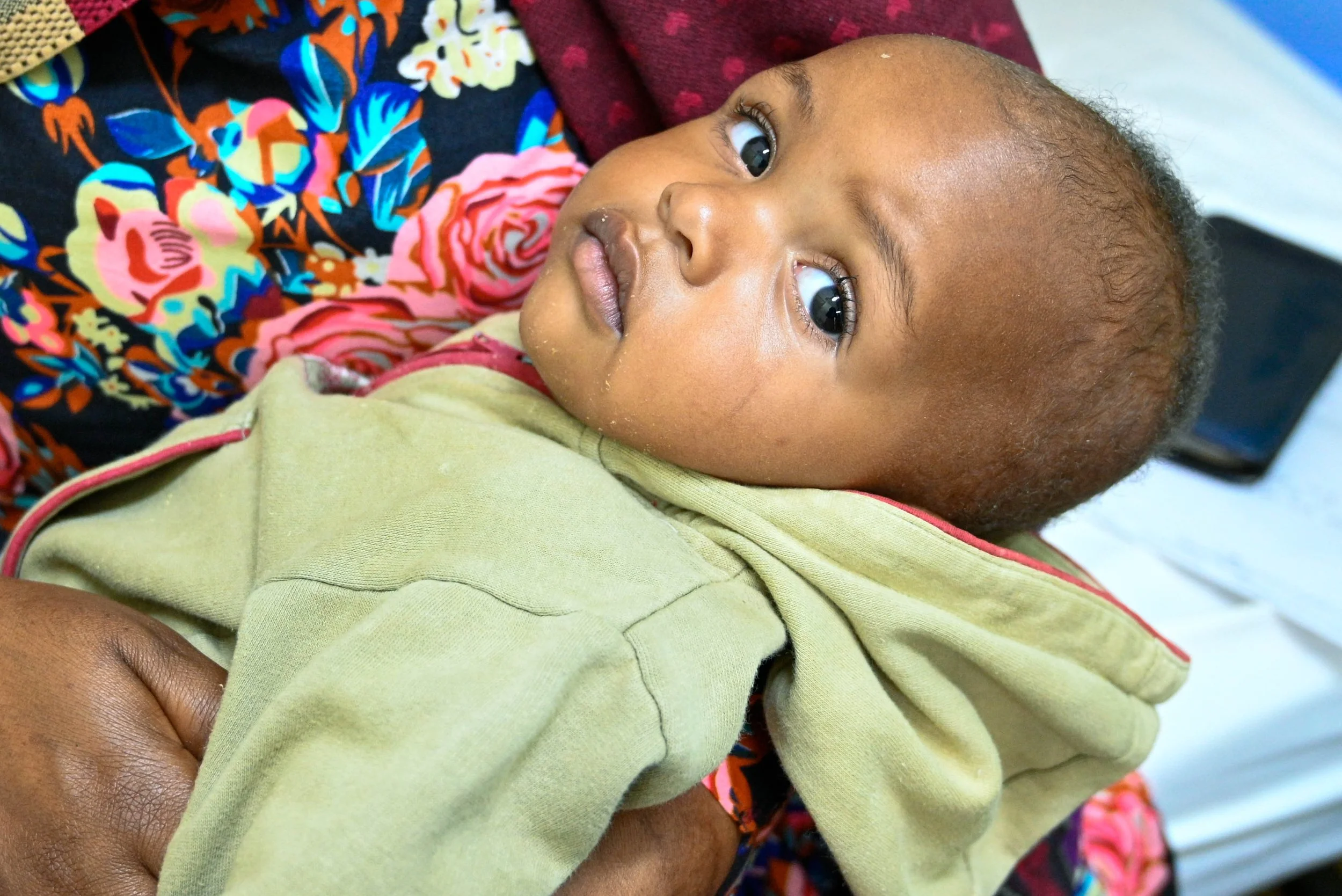
Frank* is only 4-years-old. He is at FAME because he suffers from epilepsy, a brain disorder characterized by repeated seizures. He has had this disorder since he was nine months old. 

This is not Frank’s first visit to FAME. Frank has been here many times, including once to see Dr. Michael Rubenstein and the team of neurology residents and fellows from the University of Pennsylvania and Children’s Hospital of Philadelphia, who come to FAME twice a year to provide neurological care to our patients. 

Frank is back at FAME because he suffered 16 seizures last night, according to his mother. Lately, he has experienced an increase in seizures, which has led to him being pulled out of school. His school has been very supportive of his condition, but when his seizures happen every other hour, they cannot handle it. He's also running a fever that won't break. His mother is very worried about him

“The seizures have gotten worse lately, and the high fever is a new thing. I'm happy that a well wisher helped me bring him to FAME. Frank was on medication for six months before, and that helped him tremendously. I’m here to ask the doctors if they can help me control these seizures, maybe with the same medication again.” - Mama Frank 

At FAME, Frank and his mother are working with Dr. Anne Ghati, FAME’s focal neurologist. For almost 10 years, Dr. Anne has been working closely with Dr. Rubenstein’s team of Neurology residents and fellows, learning a lot in the process.  And just this May, Dr. Anne spent one month at University of Pennsylvania doing an observership with their neurology team.

“I am very familiar with Frank’s case. On the day he was admitted to the inpatient ward in the morning, he had already suffered four seizures. His mother explained that he got seizures after every one to two hours. I prescribed him phenobarbital, a prescription medicine used to treat and prevent the symptoms of seizures. Due to this, he only suffered a few seizures during admission.” - Dr. Anne Ghati

In some cases, epilepsy can have a genetic component, which may be the case with Frank, as his mother recalls having something similar between the ages of three and seven. 

“My mother tells me that I also had seizures when I was young. She is not sure whether it was epilepsy since I never saw a doctor and the condition resolved itself, but I fear this might be what Frank has. His two older siblings are okay though, they don’t get seizures. It’s only Frank.” - Mama Frank 

Frank also had the chance on this visit to consult visiting volunteers, Marin Jacobwitz, NP and Dr. Daniel Licht, who are visiting pediatric neurologists from the University of Pennsylvania.

I love FAME for their good and caring service. When he was admitted to the inpatient ward, every time Frank suffered a seizure the medical staff would come running to help me and make sure that he was okay. When I came to the reception the first time, they immediately fast tracked me into seeing a doctor. I didn’t have to wait in line with a child suffering seizures. I was and still am very grateful to FAME. You share the burden of this disease with me. Thank you!
— Mama Frank

*While the patients’ names have been changed to protect privacy, permission was secured to share his photos and stories with FAME supporters, and to raise awareness of available medical care at FAME.

FAME Africa
Reflection from a Volunteer: Pediatric Neurologist Dr. Natalie Ullman

As neurologists, our instinct is to observe and start assessing patients from the moment they walk through the door. When I first spotted this child, it was not immediately clear why she had come to see neurology.  Having no pre-registration and no prior medical records available, I sat looking at her while the interpreter introduced us to her mother in Swahili. I noted a bright, beautiful, 2-year-old child, who was smiling at me and curious about the clinic visit. Only when her mother started to explain why she had come, did I notice a mildly spastic right arm and leg. Her mom said that she always had weakness on the right side, and although she was now 2 years old, had not yet started walking. It quickly became apparent that the child had suffered a neonatal stroke. 

The most important intervention for children who have suffered a neonatal stroke is therapy. This is especially true early in life to help their brain rewire the area that was injured and avoid spasticity and contractures, which can make it permanently difficult to use the limb. I was only a few days into my rotation in Tanzania and had already learned that access to physical therapy, especially in the more rural area where we were practicing, was challenging. I started to feel a sense of frustration, that I had little to offer this family as they likely would not be able to afford a trip to one of the larger cities to get the therapy services she needed. After talking with her mother more and conducting an exam, I learned that she was already pulling to stand and taking steps with very little hand-holding from mom. Despite the weakness, she was able to support herself well on her right leg and also was using the right arm to reach for and hold objects. Her speech and thinking were right on target for her age, my doorway assessment of a bright, curious child was spot-on. 

I explained the diagnosis of neonatal stroke to her mother, but I was encouraged by her development so far. Although she will definitely be a left-handed person, and probably walk with some degree of a limp, I was optimistic that she would soon start walking independently, and she would do very well cognitively. It was also impossible not to comment on what a beautiful, “mzuri” child she was. She was one of those kids that as soon as you start to interact with them, you can’t stop smiling. She was engaging, playful, and had an infectious smile. 

As the interpreter started to translate, I sat in shock as her mother burst into tears. I wasn’t sure if this was the first time anyone had used the word “stroke”, or if she was upset about my comments on her daughter’s weakness. I felt terrible, and wondered if I had been too direct in my delivery. To my surprise, I then realized her mom was crying tears of happiness. She was relieved to hear my assessment and finally have a diagnosis. She has been told by a doctor in the past that her daughter would never walk, talk, or interact with the world in a meaningful way. This had been weighing on the family for the entirety of her daughter’s life. Not only is this sad, but can be incredibly detrimental to the child. If the family believes there is no hope and does not engage with and support their development, the child can have significantly worse outcomes. Fortunately, this was not the case with my patient. 

I was reminded at this moment that healing someone does not always involve doing something. Many people who go into medicine, myself included, are motivated by a desire to “fix” things, either with medication, procedure, or intervention. One of the both challenging and motivating things about neurology is the many diseases for which we still don’t have a “fix. Practicing in the United States where we are surrounded by “cutting edge” research and technology, and heroic survival stories flooding our news feeds, patients come to us expecting miracles, often after irreparable neurologic injury. While we have made some incredible advances, diagnostics and therapies are not available to everyone equally even within the US, and especially less so in most other parts of the world. In this moment, I was reminded of the incredible healing power of knowledge and thoughtful dialogue. In residency, I realize now I had lost sight of this. We are often stressed, rushed, tired, and burned out. I found myself skipping that extra step to explain things a little more slowly, thoroughly, and empathetically. This mzuri child and her mother reminded me how powerful this can be, and is something I will consciously try not to lose sight of upon returning home. 

I am certain that I gained more from my experience at FAME than I was able to offer to the patients in my short month there. This is not how it is supposed to be, but I think it is inevitable as I have so much to learn. It serves as motivation to use what I have learned to help others for the rest of my life, both in practicing medicine and in being a kind, responsible, and empathetic human during our short time on earth. 

FAME Africa
Sehewa’s New Toys!

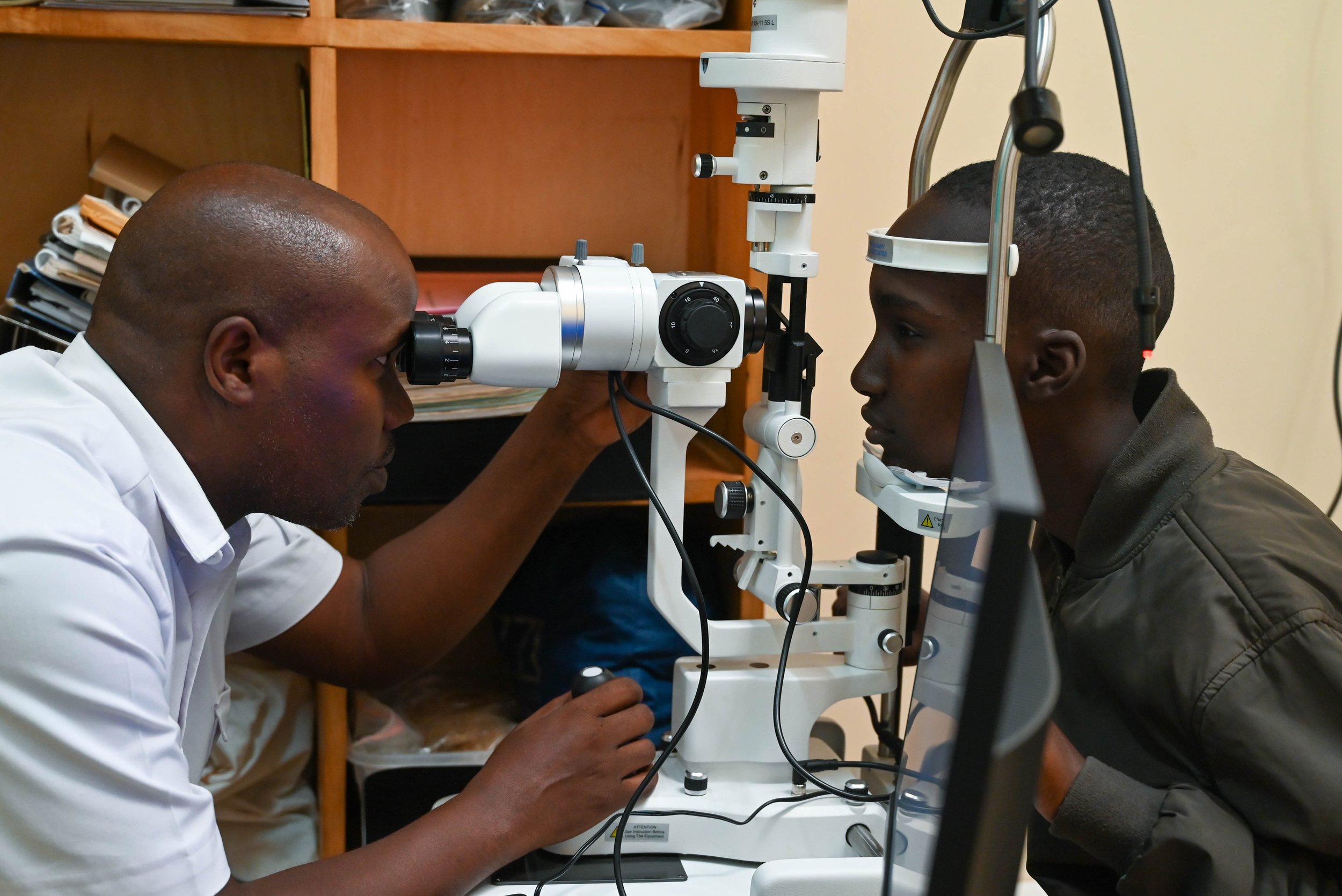
Sehewa Mganga, FAME’s RN Head Anesthetist also trained as an Ophthalmic Assistant and has 10 years of experience practicing optometry. FAME has been receiving more and more patients in need of eye care. In June alone Sehewa treated 48 optometry patients. In order to support the growing needs around optometry care, FAME has procured two new digital machines for conducting eye examinations. 

Picture 1: Slit Lamp, a microscope with a bright light that enables a closer look at the outer and inner structures of the eye, in order to detect diseases.

Picture 2: Digital Visual Acuity Chart, a comprehensive vision tester operated by a remote with dedicated keys for each chart. This makes Sehewa’s job much easier, by eliminating the switches used on traditional charts. 

These two machines will be of great use to FAME, modernizing our eye care department and improving examination, diagnosis and treatment. They will help reduce referrals to other hospitals by better positioning us to detect more eye conditions earlier, continuing FAME’s mission of providing comprehensive healthcare for the the close to 3 million people in FAME’s catchment area. 

Some of the most common diagnoses that Sehewa treats include allergic and bacterial conjunctivitis, cornea ulcers, blunt trauma, extra ocular foreign bodies and chalazion (eyelid cysts). All of these conditions can now be detected and treated early thanks to these machines. FAME also recently received a donation of 300 fashionable FAME sunglasses for photophobic patients!

There are a lot of people suffering silently from different eye disorders. Let’s be proactive and conduct regular eye checks with the right equipment, preventing further complications.
— Sehewa Mganga, RN
FAME Africa
“A Good Hospital in a Village”

Mama Lucas was a worried woman. Her 1-year-old son Lucas* was having a medical condition that was not getting resolved, despite several visits to different doctors. Lucas had a swelling in his groin area, and every time she changed his diaper or gave him a bath, she noticed that the swelling got bigger and bigger. In the beginning, it was just the swelling, but with time she noticed that it became painful to the touch, as Lucas would cry hysterically if she touched it. In a few weeks, Lucas started vomiting and experiencing diarrhea. 

“I was very worried. Lucas’s condition kept getting worse, despite me visiting different clinics. The last clinic we went to suggested that circumcision would solve the issue, but in my heart I didn’t agree with this. I can’t explain it because I’m not a doctor, but somehow I knew he needed something more drastic than just circumcision to get better.”  

Lucas and his mother live in Arusha, 88 miles from FAME. So how did they end up at FAME?

“It’s actually a strange story! My husband’s relative passed away and we came to Karatu for his funeral. During the funeral, one of his older aunties collapsed from grief and was unconscious for a long time. Someone suggested that she needed to see a doctor, and asked us to take her to this hospital called FAME.”

When they got to FAME, Mama Lucas was impressed with the swift medical attention the auntie got, the professionalism in which the medical staff handled the case, and the size of the hospital.

I remember asking myself how such a good hospital ended up in a village! In my experience, such a hospital could only be located in a big town
— Mama Lucas

Mama Lucas went back home to Arusha and didn’t think about FAME again. That was until her son’s condition kept deteriorating. 

“I was losing my mind. The boy kept getting sicker and sicker and we couldn’t figure out why. In my state of desperation, I remembered FAME hospital and decided to bring him here. My friends were very surprised when I told them that I would be leaving for Karatu to seek medical care. ‘It should be the other way round!’ they said, over and over.” 

Undeterred, Mama Lucas boarded a bus to Karatu, and then a boda boda (motorbike) to FAME. Once at FAME, Lucas was examined and sent for an ultrasound and blood tests. The doctors discovered that Lucas had an inguinal hernia and would need surgery. 

Relieved that finally she had a diagnosis, Mama Lucas consented to the surgery and waited. The doctors had explained the procedure to her in detail, and that gave her confidence that he was in good hands. 40 minutes later, Lucas was out of surgery, and it was a success!  

I’m so thankful to FAME. I cannot even express how much! So grateful! Everybody here has been so kind to Lucas and I. We have been very well taken care of. The demeanor of the staff has been the most comforting. Lucas is now doing very well and we will be going back home soon. My friends in Arusha cannot believe it, they now want to visit FAME just to see!
— Mama Lucas

FAME is happy to receive Mama Lucas’s friends and anybody else who would like to visit. Interested in touring FAME? Contact our Volunteer Coordinator, Prosper Mbelwa at volunteer@fameafrica.org

*While the patients’ names have been changed to protect privacy, permission was secured to share his photos and stories with FAME supporters, and to raise awareness of available medical care at FAME.
FAME Africa
FAME COVID-19 Vaccine Outreach Program

The FAME COVID-19 outreach team getting ready to leave for the villages.

Since receiving the COVID-19 vaccines from the Tanzanian government in October of 2021, FAME has been on the frontlines conducting COVID-19 vaccine outreach for the people and communities in our catchment area. 

The FAME team has drummed up support for this program by going to local markets and businesses to give out vaccines, putting together a radio program for vaccine education, making a vaccine educational video aired at FAME reception, and giving out “I’m COVID-19 vaccinated” buttons to encourage vaccine uptake. The team has now added another activity to the outreach program, door-to-door vaccinations.

One month ago, FAME expanded our COVID-19 outreach program to include a door-to-door COVID-19 vaccination campaign. This initiative is aimed at addressing the vaccine hesitancy among underserved groups and improving vaccination rates among hard-to-reach populations.

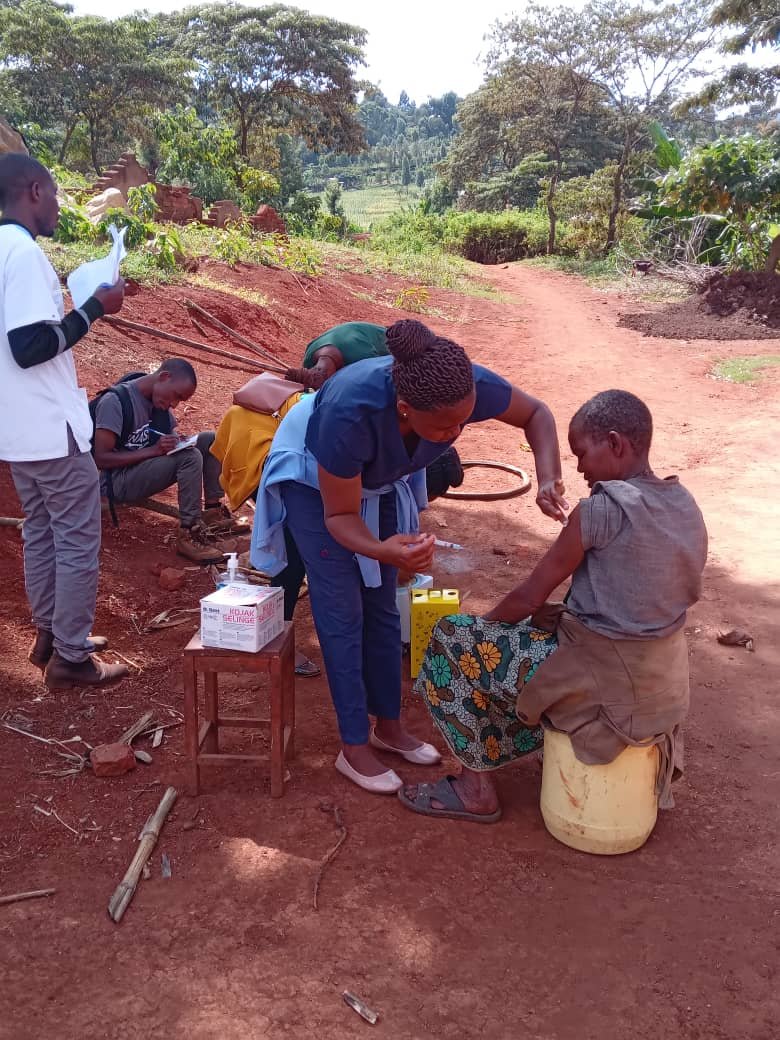
Every day at 8am, including weekends, the FAME team sets off to the most remote parts of our catchment area. Some of these areas are more than 20 miles from FAME. When they arrive in these villages, they meet with the area chief and present a letter of permission from the District Medical Officer to conduct outreach in their village. This is a crucial part of our multi-pronged strategy to ensure community acceptance.

The FAME COVID-19 outreach team consists of a driver, one medical recorder, five nurses, and one social worker. They are working to increase trust in the COVID-19 vaccine, provide access to the vaccine and vaccine boosters and deliver education about COVID-19, including how it is transmitted and how to keep children safe. 


Vaccinating one of the villagers.

FAME’s COVID-19 vaccination outreach coordinator, Siana, gives last minute instructions to FAME driver, Omari.

FAME’s Social Worker, Kitashu Nganana leaving for the outreach.

Siana Nkya, FAME’s COVID-19 vaccination outreach coordinator, explains:

I have a team of eight FAME employees who volunteer for this outreach on their days off. Since the outreach is done on their days off, it does not affect the quality of their work at the hospital. I am so grateful to them for giving up their free time to do this. Without them, we wouldn’t be able to reach these villages that would otherwise not have access to the vaccine.
— Siana Nkya

At the villages, FAME’s Social Worker, Kitashu, translates from Maa to Swahili for the team, and in cases where the household speaks a different language, they enlist the help of neighbors to translate.

However, this has not been without challenges. The team encounters a lot of misinformation, which leads to vaccine hesitancy. 

On top of the vaccines, we are providing COVID-19 education to these groups. We have encountered misinformation that we try to correct. For Instance, we have met many women who refuse to get the COVID-19 vaccine because they’re afraid it will make them infertile.
— Social Worker Kitashu Nganana.

When the team is met with misinformation, they spend time sitting with the people to share the facts, in this case that theCenter for Disease Control and Prevention (CDC) has long stated that there is no evidence that any vaccines, including COVID-19 vaccines, cause fertility problems in women or men.

Sometimes, the villagers will ask the team if they’ve been vaccinated before. Noting that 98% of FAME staff is vaccinated against COVID-19, the team explains that they have received the COVID-19 vaccination, which creates a trusting relationship with the community members. Oftentimes, the villagers will seek repeated confirmations that the vaccine is free, and that they will not be charged afterwards.

“The case that sticks with me is the case of the woman who suffered from TB, thus making her more susceptible to catching the coronavirus. We talked to her and answered her questions, and slowly by slowly we could see that she understood the facts presented, and she accepted to receive the vaccine.” -Kitashu Nganana

Since FAME started the COVID-19 vaccination program in October 2021, we have vaccinated 456 people, at the hospital and in the field. This includes 305 individuals from the door-to-door vaccination outreach activity, and 34 booster shots. In the beginning of the door-to-door vaccination drive, the team would vaccinate four people a day, sometimes even less. Slowly, these numbers started to pick up and in two weeks, they had vaccinated 86 people. We can now say that the door-to-door vaccination efforts have yielded the most vaccines administered since the start of FAME’s COVID-19 outreach program.

FAME’s Pharmacy team model their “I am COVID-19 vaccinated” buttons


FAME Africa